

A translucent roof is an efficient and cost-effective solution for dry freight truck bodies, designed to improve interior visibility while reducing energy consumption. By allowing natural daylight to enter the cargo area, a translucent roof provides sufficient illumination during loading and unloading operations. This significantly reduces or even eliminates the need for roof-mounted lighting systems, simplifying the body structure and lowering both installation and maintenance costs.
Translucent FRP Sheet
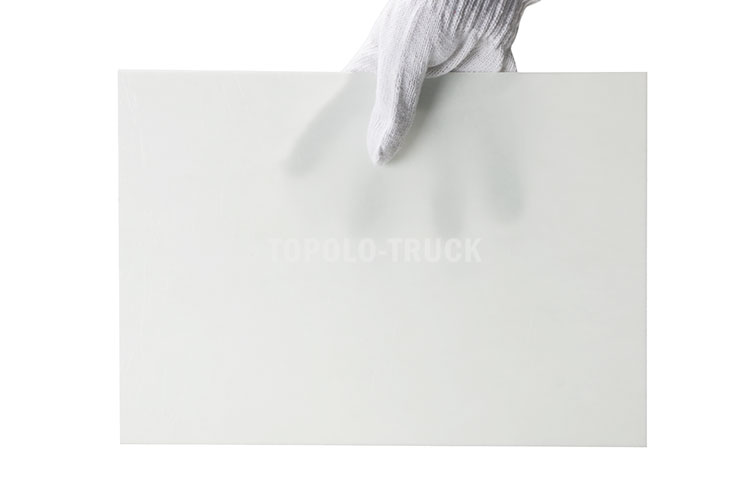
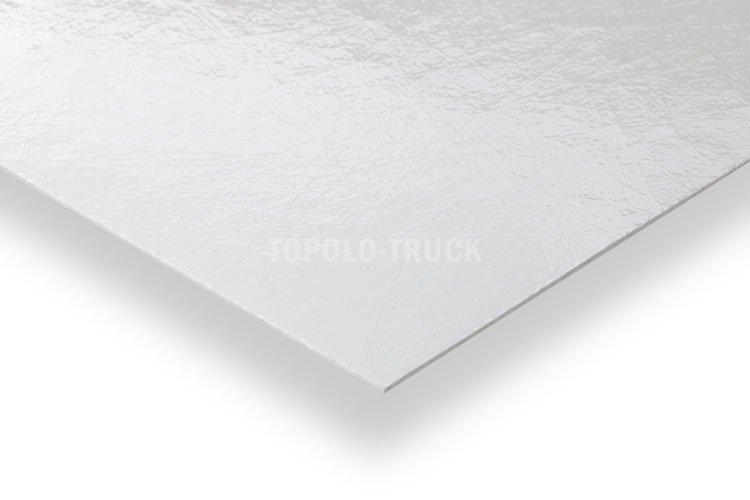
The translucent FRP (Fiberglass Reinforced Plastic) sheet is manufactured from thermosetting resin reinforced with chopped glass fibers. This composite structure offers an excellent balance of strength, durability, and light transmission, making it ideal for commercial dry freight truck bodies.
Why Choose It?
- Lightweight
A fiberglass roof adds only negligible weight to the vehicle body and can be supported by lightweight structural beams (aluminum or wood), helping to maintain payload capacity and overall vehicle efficiency.
- High Rigidity and Flatness
Despite its low weight, the panel provides good stiffness and high surface flatness, ensuring structural stability and long-term performance under daily transport conditions.
- Long-Term Weather Resistance
Manufactured with weather-resistant thermosetting resins, the translucent GRP sheet maintains stable mechanical performance and light transmittance under prolonged exposure to sunlight, rain, temperature variations, and UV radiation. It resists aging, yellowing, and cracking, ensuring a long service life with minimal maintenance.
- Outstanding Cost Performance
Compared with wall panels and floor panels, the cost of a translucent roof panel is minimal. When applied at scale, it can significantly reduce the total truck body manufacturing cost while delivering clear functional benefits.
Basic Properties
| Item | Typical Value | Unit | Test method |
|---|---|---|---|
| Thickness | 1.3 | mm | Internal |
| Weight | 2000 | g/㎡ | Internal |
| Glass content | 33~38 | % | Internal |
| Barcol hardness | 40~50 | Barcol | GB/T 3854-2017 |
Mechanical Properties
| Mechanical Properties | Typical value | Unit | Test method |
|---|---|---|---|
| 0° tensile strength | 113 | MPa | GB/T 1447-2005 |
| 90° tensile strength | 108 | MPa | GB/T 1447-2005 |
| Bending strength | 182 | MPa | GB/T 1449-2005 |
| Impact toughness | 71 | kJ/m² | GB/T 1451-2005 |
| Linear expansion coefficient | 1.64×10⁻⁵ | /℃ | GB/T 2572-2005(35℃~100℃) |